A cold snap hits, pipes burst across the city, and a plumbing company's phone starts ringing before the owner has finished their coffee. By 9 a.m. every line is busy. By noon, calls are going straight to voicemail because there's no one left to answer them. The same three days that should be the best of the year turn into the days the business loses the most customers, not because the work wasn't there, but because the phone couldn't keep up with it.
The fix isn't hiring temporary staff. You can't train someone fast enough to handle an emergency-repair conversation competently in the two hours before the rush starts, and a bad temp hire on the phone during your busiest window can do more damage than no answer at all. What scales fast enough for a spike is a system that answers every call the moment it arrives, whether that's one call an hour or twelve calls at once, without needing a person standing by for each one. An AI receptionist is built for that, and a demand spike is where the difference shows up fastest.
Why a spike is worse than a normal missed call
A missed call on a random Tuesday is bad. A missed call during a spike is worse for two reasons that compound.
First, the customer isn't calling around for a quote they'll compare next week. They have a burst pipe, a broken AC in a heat wave, or whatever triggered the surge in the first place, and they need someone now. One widely cited HubSpot consumer survey says 90% of consumers rate an immediate response as important when contacting a business, with 60% defining "immediate" as 10 minutes or less, and a PwC report claims that 32% of customers walk away from their favorite brands after just a single bad experience. That willingness to move on is an urgent risk, because the second business on the list may be answering too, even if the first one they called did not.
Second, every other business that does the same work as you is getting the same spike at the same time. A cold snap doesn't burst one pipe in one house, it bursts pipes across the whole service area, which means every plumbing company's phone is ringing at once. In a normal week, a missed call might just mean the customer tries you again later. During a spike, the customer has four other options ringing off the hook too, and whoever answers first gets the job, the repeat business, and the referral that follows it. The businesses that are unreachable during the days everyone needs them are the ones customers remember as unreliable for years, long after the storm has passed.
Why adding staff doesn't solve it
"Hire more people to answer the phone during busy periods" sounds obvious. In practice, it rarely works for a spike, for three reasons.
Spikes are unpredictable in timing. You don't get two weeks' notice before a cold front moves through or a heat wave breaks records. By the time you realize call volume is climbing, the spike is already happening, and posting a job, interviewing, and training someone takes longer than the surge lasts.
Spikes are short. Even if you could hire fast enough, paying someone for a role that's only needed three or four days a year doesn't make financial sense for most businesses, and an underused temp hire sitting idle the rest of the month still costs money.
Spikes require competence, not just availability. Someone answering phones during an emergency-repair rush needs to ask the right triage questions, quote accurately, and book the job correctly the first time. A rushed, undertrained temp on the phone during your highest-stakes week can misquote a job, book the wrong service, or handle an urgent call so poorly the customer hangs up anyway. Bad coverage doesn't solve the problem.
What changes with an AI receptionist during a spike
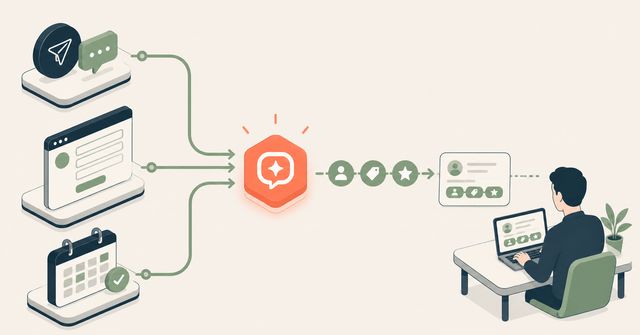
An AI receptionist doesn't get overwhelmed by call volume the way a person or a small team does, because it isn't limited to one conversation at a time. Whether ten calls come in during the same minute or one call comes in every twenty minutes, each one gets answered immediately, at full attention, with the same information every time.
This can make a large difference during a sudden surge. The system doesn't need two weeks of notice to scale up. It doesn't need training before a surge hits, because it was already trained on the business's services, pricing structure, and scheduling rules before the spike ever started. And it doesn't get worse under pressure the way a stressed, overloaded staff member might, which means the twentieth call of the day during the rush gets handled as well as the first.
The busiest, highest-stakes days of the year stop being the days the phone system fails. Calls get answered, jobs get booked or at least accurately logged and prioritized, and customers calling during an emergency get a competent response instead of a busy signal. The volume that would have overwhelmed a front desk on a normal day gets absorbed without anyone needing to scramble for extra hands.
What this doesn't replace
An AI receptionist handling the phone during a spike can't add extra technicians, crews, or physical hours to a day when demand outpaces capacity. What it does change is how that bottleneck is managed. Instead of letting overflow calls bounce to voicemail or ring unanswered, the system recognizes when schedule density is maxed out. It can transparently communicate current wait times, explain scheduling limits, and capture qualified lead details or future bookings—giving callers a professional, immediate touchpoint instead of a dead line, and ensuring your business stays in control of its pipeline even when the calendar is full.
Key Takeaways
- A missed call during a demand spike costs more than a missed call on a normal day, because the customer's need is urgent and every competitor's phone is also ringing at the same time.
- Hiring temporary staff to cover a spike rarely works, because spikes are unpredictable in timing, too short to justify a new hire, and require enough competence that an undertrained temp can do more harm than good.
- An AI receptionist answers every call at full capacity regardless of volume, so the twentieth call during a rush gets handled as well as the first.
- When operational capacity is full, the AI doesn't leave callers on a dead line, it transparently manages wait times and locks in future bookings so no lead is lost to frustration.
If your phones can't keep up when demand spikes, that's a call-handling gap, not a staffing problem you can hire your way out of in time. Learn more about how an AI receptionist handles call volume, or reach out to talk through what a busy-season rush costs your business right now.